8/29 - 9/26 2026
ArchiveQuintin Atchison

2/28 - 3/28 2026
Quintin Atchison
John's Body
John's Body
Butterflies' wings, across species, possess a vast variation in types of mimicry, simulating not only predators, but also plant material. When a butterfly closes its wings, its body becomes a thin line. Quintin Atchison’s sculptures take on similarly deceptive and illusionistic forms. Not only do the sculptures resemble botanical and animal life (leaves, bark, fins), they also seemingly contort and shrink themselves into adaptive positions and absences. The sculptures contain eyes. Less a human or animal eye, whose function is to look or be looked at, but one that you look through, like the eye of a sewing needle (not unlike a closed butterfly). Just as the needle’s eye leads to a point, so do Atchison’s sculptures. The three sculptures that comprise the show John’s Body, each of them extremely vertical or horizontal, prick the viewer with pointed tips and a precision of intent (drawing the smallest drop of psychic blood). In a limited palette of pure white, murky grey, inky black, dark chocolate, and matte lipstick mauve, the deceivingly simple forms command association, while maintaining slippages.
John’s Body is Atchison’s third solo show in Los Angeles. His sculptures are characterized by their often slim, elongated frames and their multilayered relationship to mimesis. Both reproductions and novel objects, the sculptures often indicate a need to hide or protect themselves with curtains, blockades, or shrinkage. They are materially disparate, but frequently return to pure white plaster. In John’s Body the forms aren’t precisely nameable, though they conjure an amalgamation of references created through surface and form. This amounts not to a foreign object, but to a felt gesture. The works bend and halt, twist and ripple, stand erect and lie comatose. Their foreignness as forms sits in the process of becoming familiar.
The show’s namesake work, “John’s Body” (2025), is a white plaster form that stands upright with a short base. The intricacies of the form are visible through shadow. Light catches ridges and creates thin veiny lines or more gradual slopes. A bone white piece—the form isn’t unlike a bone—it resembles a femur perhaps. And like a bone, it’s smooth and strong, but pockmarked and delicate. It is both part and whole of a body.
Color is sometimes embedded and other times appears as an evident veneer. The plaster “leaves” in “Flat Leaf-like Shape” (2025) have a wash of oil paint that sits atop the surface and shifts from a dark to light green based on the thickness of application. The “leaves” themselves are uniform and ambiguous in shape, blatantly ersatz foliage. On the other hand, the deep colors of “World Landscape” (2025) feel distinctly of the object. “World Landscape” is also the most prickly of the bunch, with a quill or needle-esque form that, like a hair’s split end, breaks away at its tip and ends in a minuscule almond-shape opening. A panoply of forms of imitation are occurring.
“Eye of a needle” as an aphorism implies impossibility, a space so narrow, it is useless. Atchison’s sculptures manage to squeeze through.
– Sonia Hauser
EVENT: 2/28/26 05:00 PM
Opening Reception
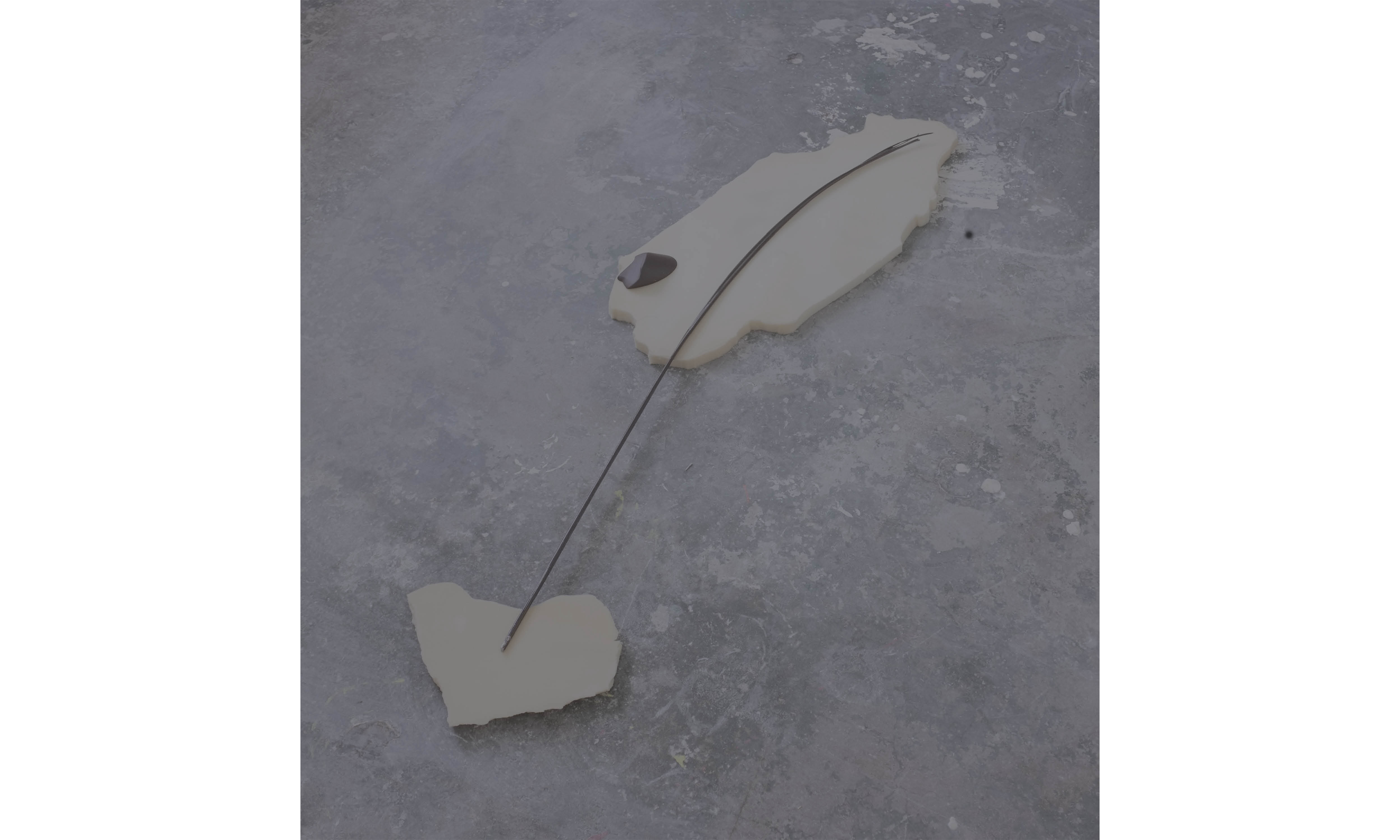
John's Body
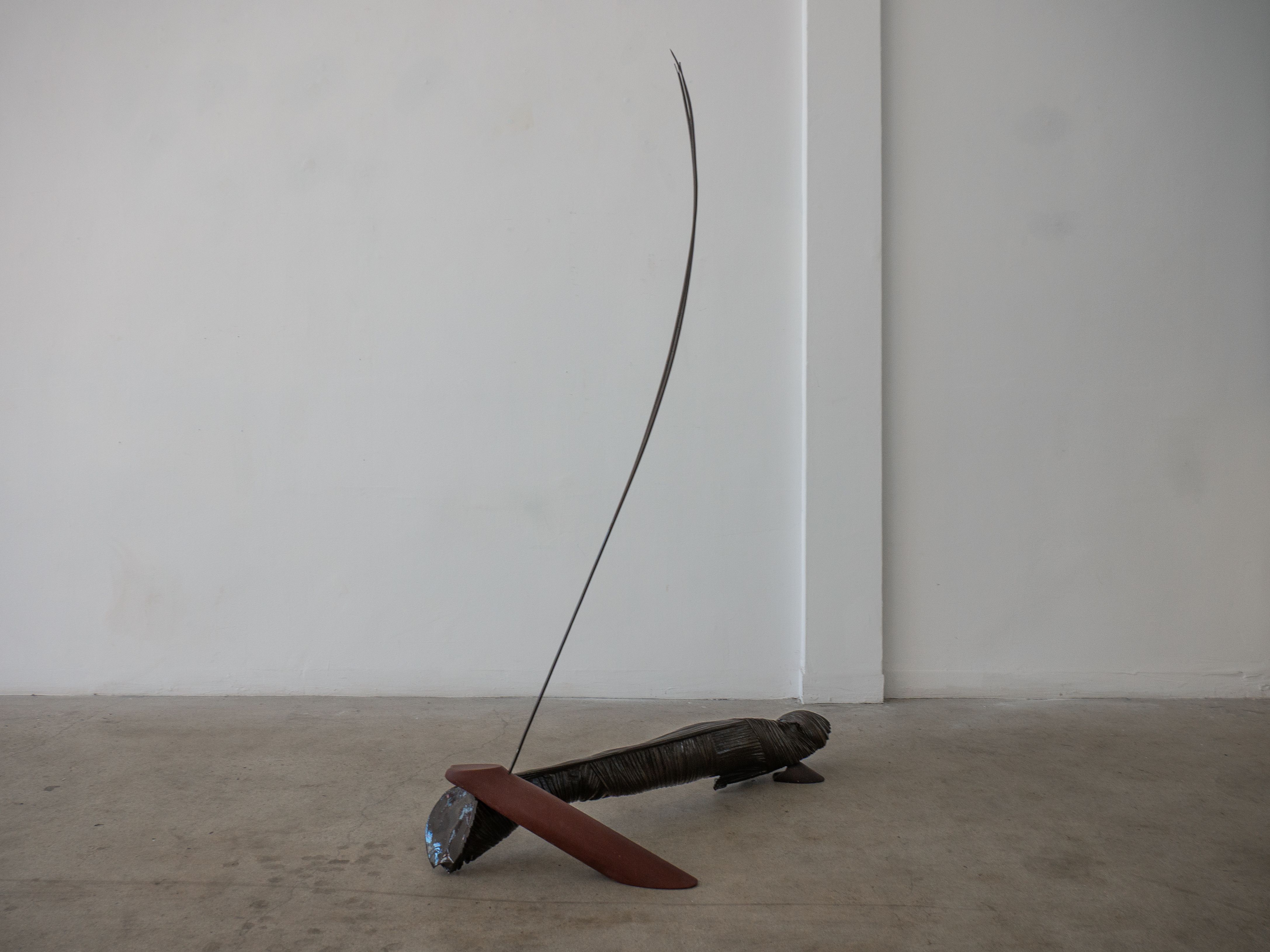
World Landscape, 2025
Plaster, stainless steel, wood, burlap, epoxy resin, oil paint, spray paint
57 x 43 x 20 in
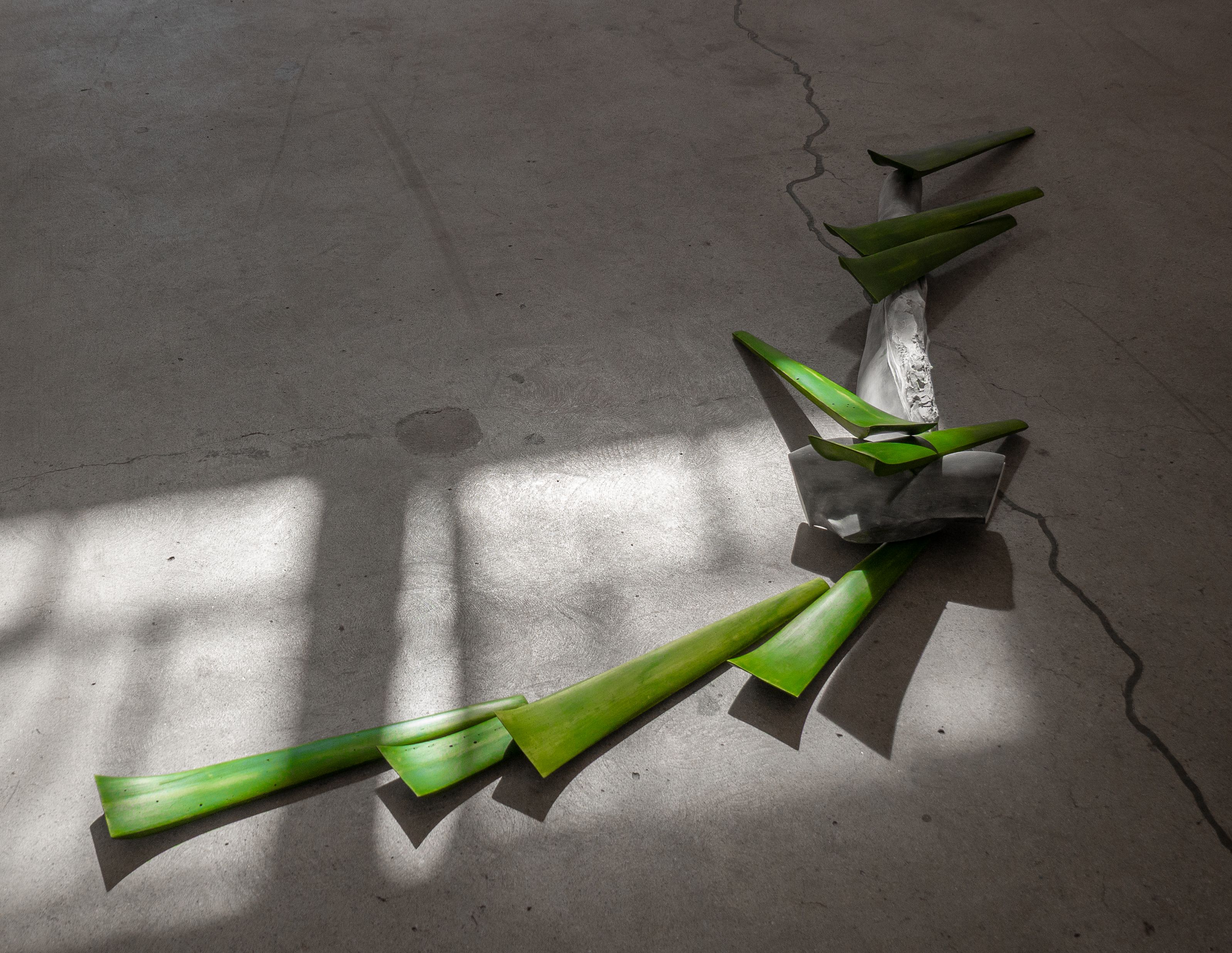
Flat, Leaf-like Shape, 2025
Plaster, wood, burlap, graphite, oil paint
Dimensions variable
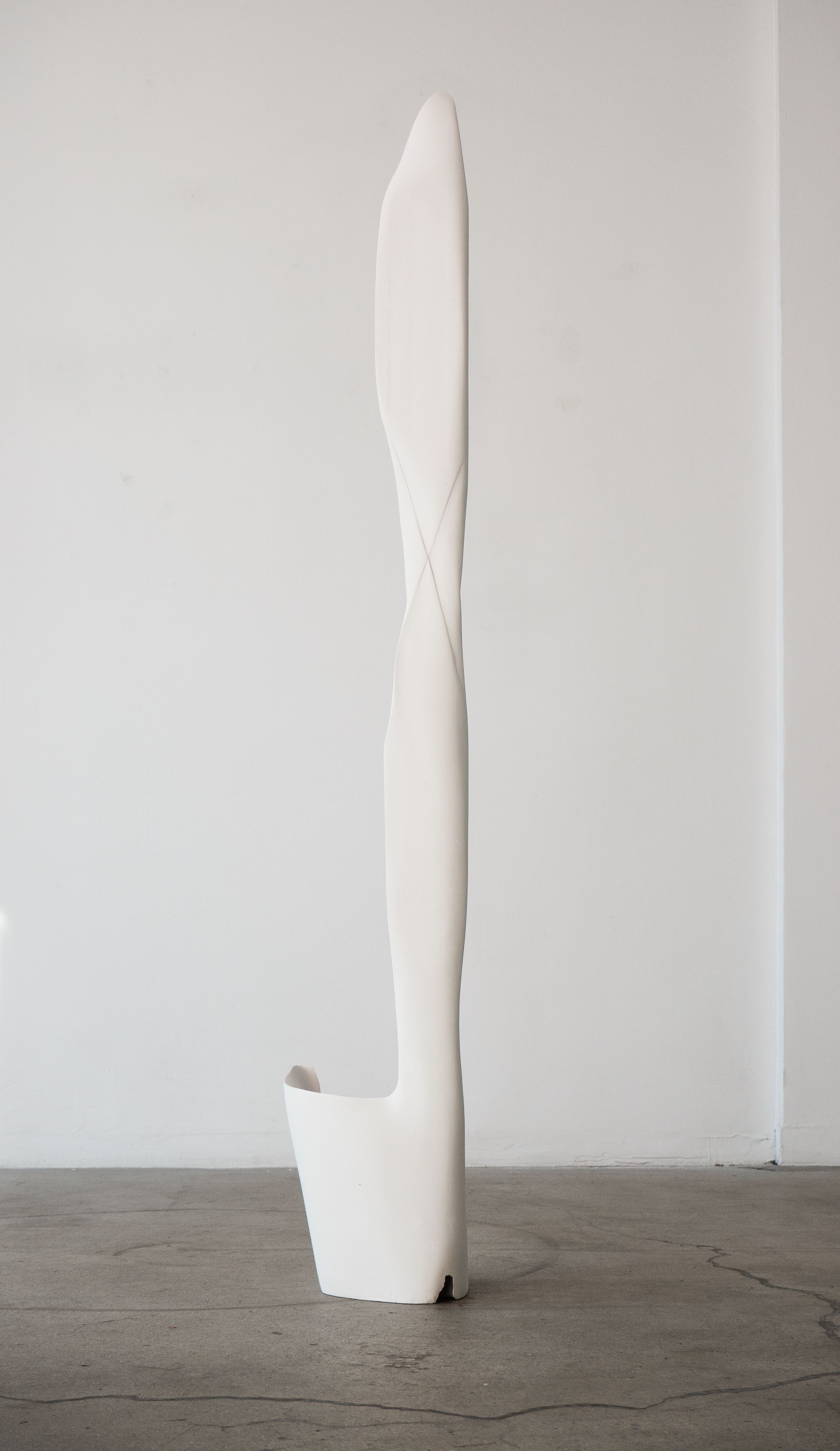
John’s Body, 2025
Plaster, stainless steel
60 x 18 x 16 in
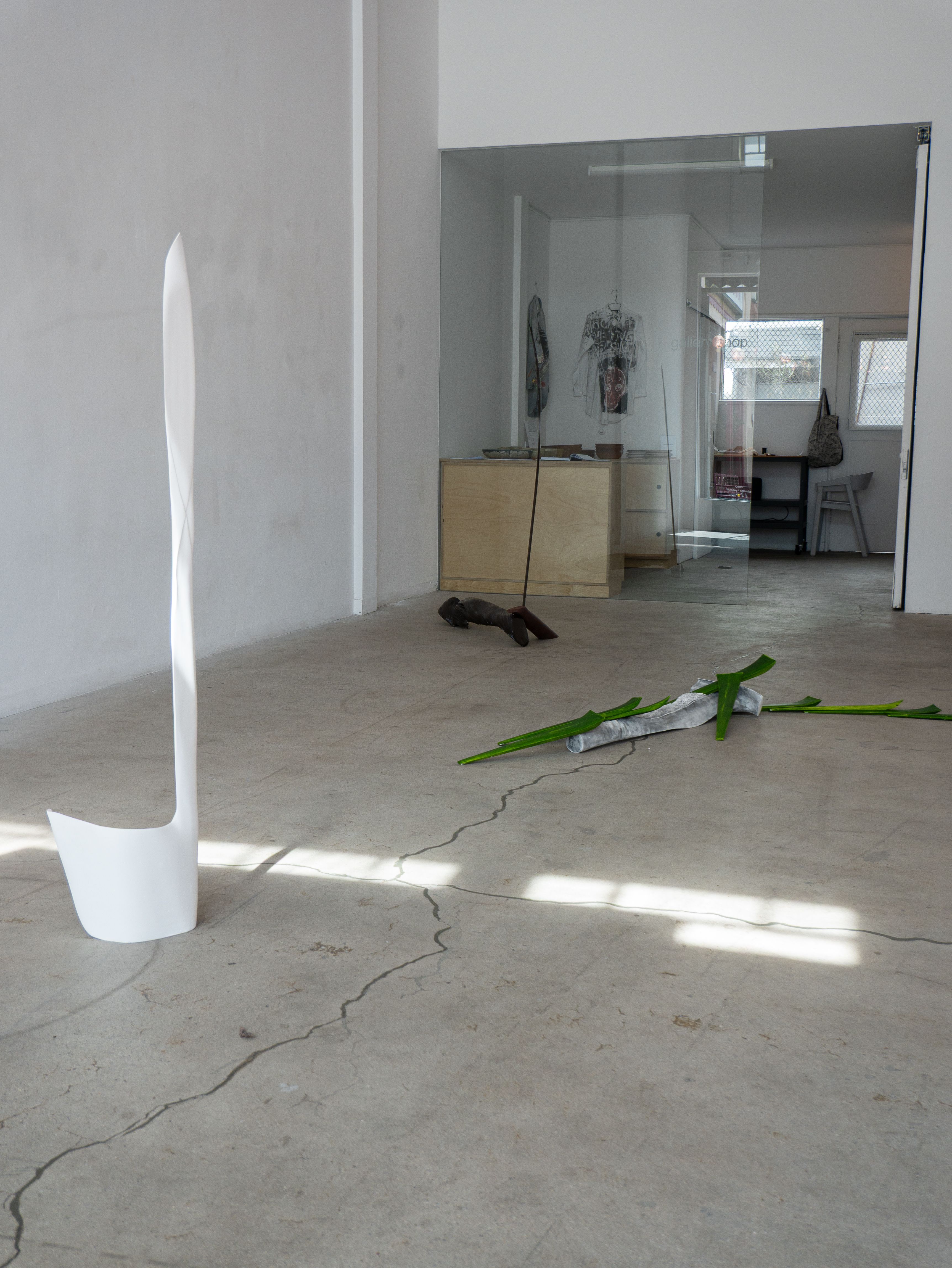
Installation View, John's Body
Group Exhibition of Abstract Work
View exhibition →7/25 - 8/22 2026
Chinatown Art Salon
2026
View exhibition →6/20 - 7/11 2026
Kevin Sullivan
Selected Works: Coda
View exhibition →4/4 - 5/2 2026
Dani Martine
As It Was
View exhibition →1/17 - 2/14 2026
Adam Janes
Memory Song (Not There)
View exhibition →12/13 - 1/10 2026
Shoshi Watanabe
31. Pho dac Biet
View exhibition →10/18 - 11/29 2025
Nick Lowe
Number Racket
View exhibition →8/30 - 10/4 2025
Cyril Kuhn
Mr. Hide east of Western Blvd.
View exhibition →7/5 - 8/16 2025
Pernilla Winberg
I am a garden, blooming with seeds planted by those who’ve walked beside me.
View exhibition →11/2 - 11/30 2024
Daisy Collingridge
Kinetic Flesh
View exhibition →8/24 - 9/21 2024
Richard Nam
Dinos + Cats
View exhibition →4/13 - 5/5 2024
Susan Maddux
Wet Drapery
View exhibition →3/16 - 4/7 2024
Alan Chin
On The Shoulders Of
View exhibition →1/27 - 3/10 2024
Margaret Morgan
Please Try Again
View exhibition →11/18 - 12/22 2023
Gastrula: A Landscape
View exhibition →10/19 - 11/12 2023
Wayne Kastning
Separates
View exhibition →9/9 - 10/15 2023
Sarah Ippolito
Close Encounters
View exhibition →7/13 - 7/30 2023
Cameron Harvey
Becoming Is Undoing (Part 2)
View exhibition →6/17 - 7/9 2023
Cameron Harvey
Undoing is Becoming (Part 1)
View exhibition →4/29 - 6/3 2023